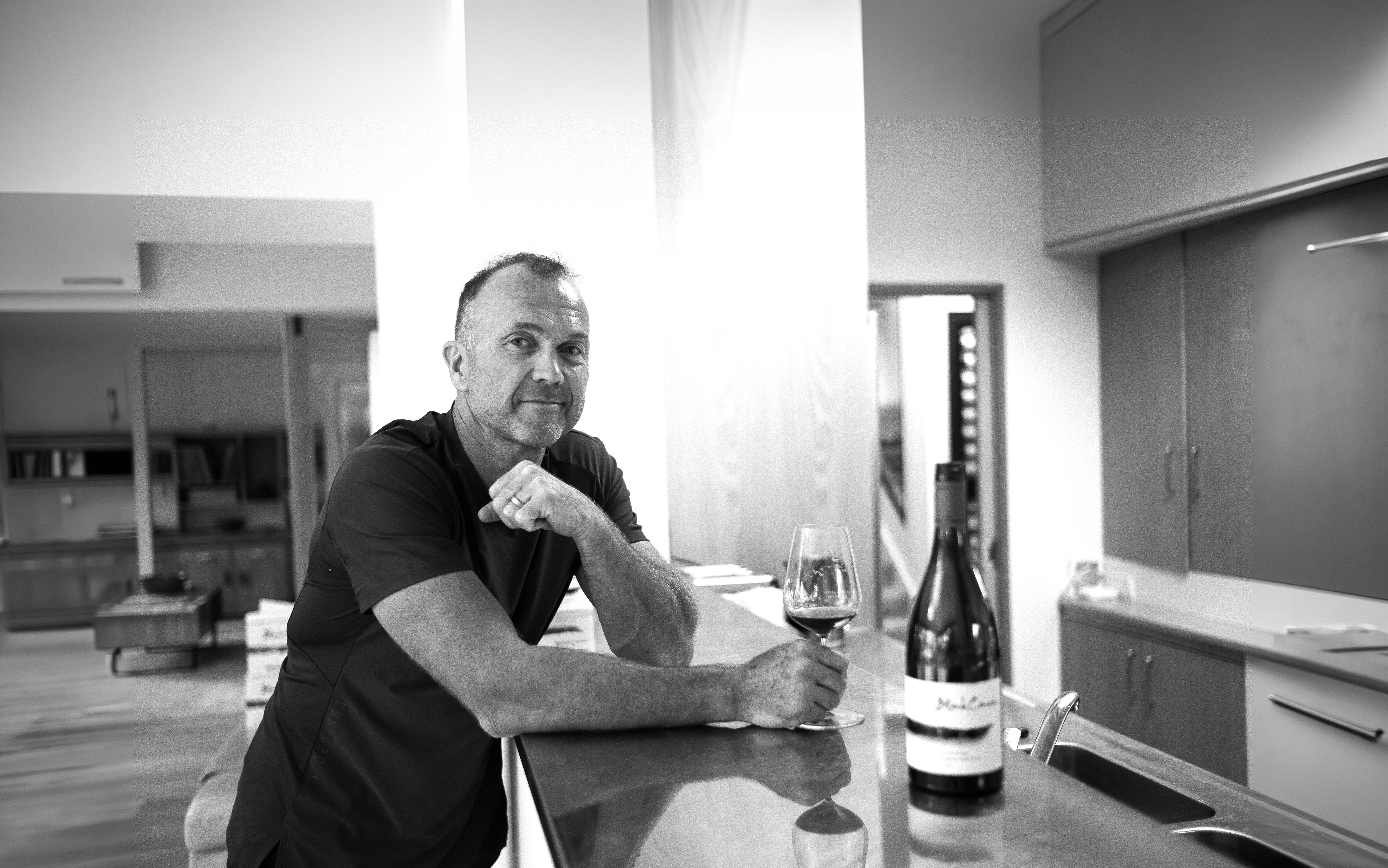
Matt Thomson's name is one you will find throughout our portfolio. Since the late 1990s, we have worked closely with Matt on several cooperative projects in the Veneto region, including Cantina di Monteforte, Cantina Valpantena and our own Alpha Zeta wines. In fact, since 1993, Matt has completed two harvests every year across his native New Zealand, Europe and beyond, with 2026 marking his 65th and 66th vintages.
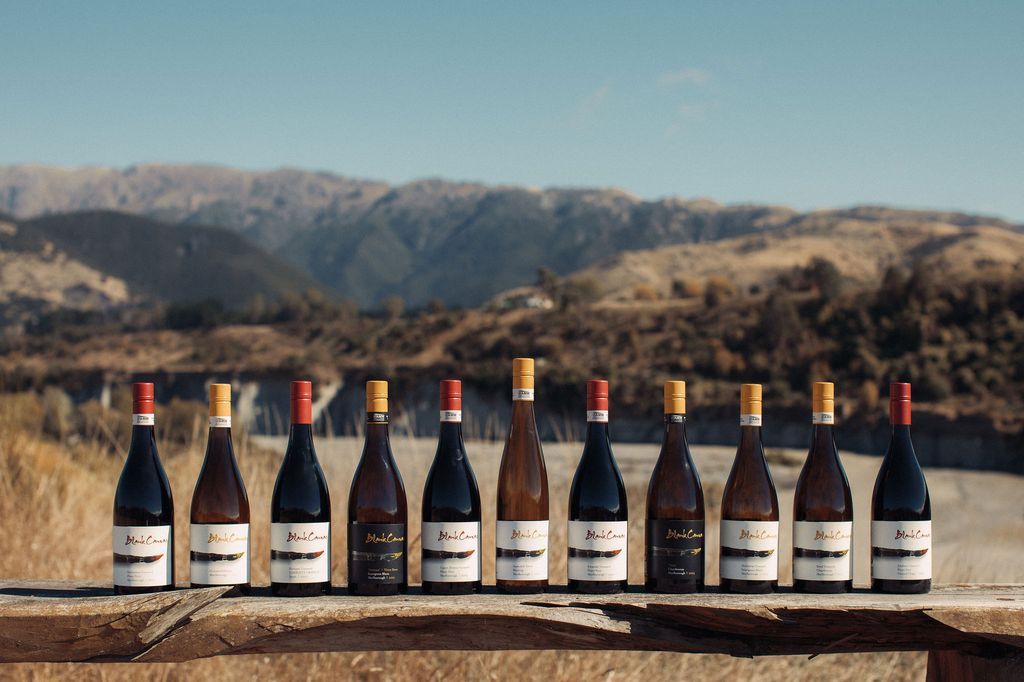
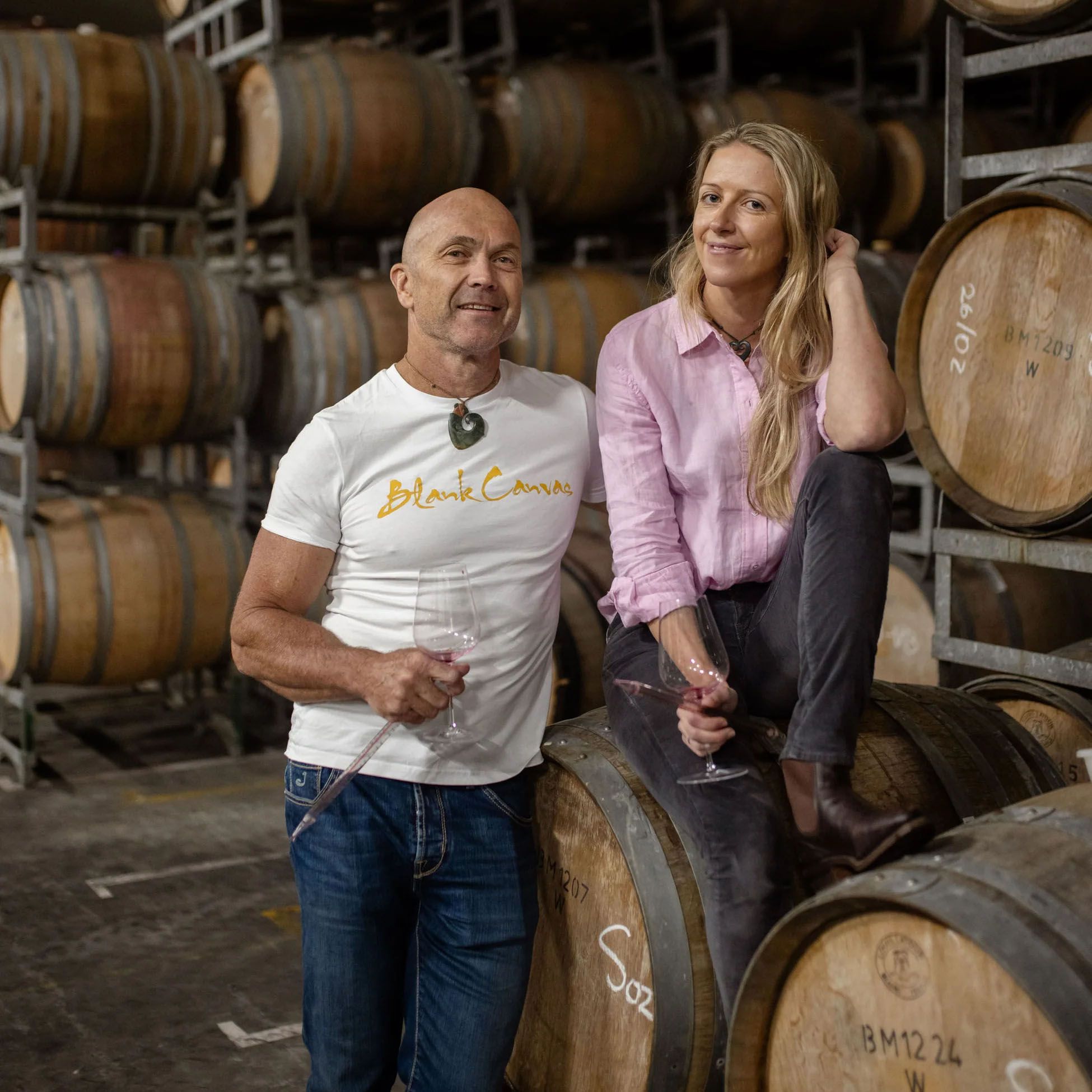
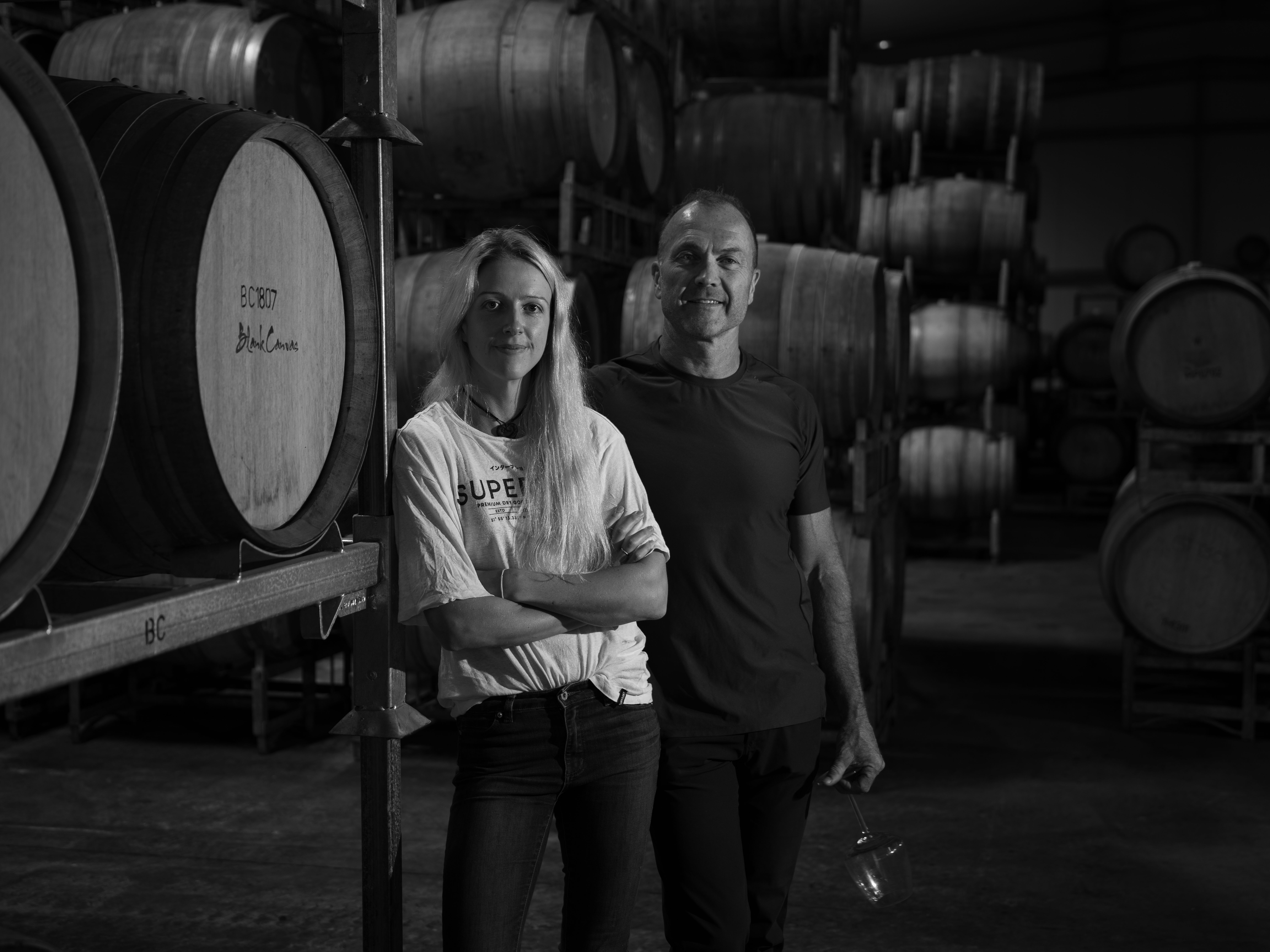
In 2012, after 38 harvests making wine for other people, Matt and his wife, Sophie Parker-Thomson MW (who has enjoyed an equally impressive career in wine), decided to finally make wine for themselves in New Zealand. Blank Canvas sees the duo working with some of the finest vineyards in Marlborough, producing site-driven wines primarily from Sauvignon Blanc, Chardonnay and Pinot Noir. Although they work mainly with growers, in 2025 they purchased a nine-hectare property in Marlborough's Omaka Valley. The amphitheatre-shaped hillside vineyard, planted at high density in 2003, is a striking site that offers breathtaking 360° views across the Wairau Valley. The low-vigour clay slopes provide a range of aspects, allowing Sophie and Matt to match variety and style to place, a founding ethos of Blank Canvas.
Today, the project produces some of New Zealand's finest wines, and Matt and Sophie have become a driving force in promoting quality, site-driven wines from Marlborough through Appellation Marlborough Wine , of which Sophie is the current chair and Blank Canvas a founding member.
Here, we speak candidly with Matt about his and Sophie's work with Blank Canvas and Appellation Marlborough Wine, what the future holds for both, and how they and like-minded producers are championing the incredible diversity of Marlborough's sites and the wines they produce.
For more information about purchasing Blank Canvas' wines, please contact your Account Manager. Not yet a customer? Contact Us to discuss opening an account.
You have an established career making wine across the world, particularly with cooperatives in France and Italy. What instigated the founding of Blank Canvas?
This was something Sophie and I really wanted to do together on our terms. As a winemaker for other estates, you always have to respect where the money’s coming from. As a chef working for a restaurant owner, it’s the same thing. There’s a vision you have, but it has to align with whoever is paying you. Sometimes the brief is simply to make a wine that performs well in shows, and that was one of my briefs at one stage. I knew how to do that.
But that’s not what you wanted to pursue?
No. Look, that’s fine because a show wine is a good wine made in a mainstream style. As soon as you go left field or right field, there’ll be people who dislike that style. So, it must be universally liked and therefore not too adventurous stylistically.
That’s interesting, though, because the philosophy behind Blank Canvas is almost the opposite.
Exactly. We would much rather make wines that some people absolutely love than wines everyone merely quite likes. There are plenty of wines that everyone quite likes. They’re perfectly good wines, but they’re not the ones people remember 20 years later.
That’s what we want to create. We want to make wines that are a little more edgy. We love whole bunch in our reds, we love wild fermentation and full solids in our whites, we like the flintiness in our Chardonnay and the perfume in the reds. Blank Canvas gives us the freedom to pursue those ideas because it’s 100% our money, and that’s why it’s called Blank Canvas. With every site and variety combination we can approach things however we want.
We also approach every vineyard differently. We might get the opportunity to work with a new parcel of fruit, or we might think a certain style could work in Marlborough. The latest example is ‘Tano’ Chardonnay. That’s something we’d been working on for five or six years. We realised we could potentially make a Chablis-inspired style in Marlborough, so we started thinking carefully about where that would work best. Chablis is cool, and the site needed to reflect that.
Then we were offered fruit from a vineyard I’d worked with 20 years earlier. Back then, I tried to make something in a richer style from it, and it didn’t really work. But as soon as this opportunity came up, we realised immediately that this was the right direction for that vineyard. That came from experience and a greater understanding of Chablis from many bottles together and with friends.
So, every opportunity becomes a conversation.
Yes, there are no formulas, no recipes, no doing something simply because that’s how it’s always been done. You constantly challenge your thought processes. Do we need to filter this wine if it is bone-dry? Would lees contact improve it? You’re continually asking why you’re doing something and challenging your stance with potential ways of improvement.
And you’re taking risks.
Absolutely. One thing we’ve realised is there’s nowhere to hide with single vineyard wines. If you have five components in a blend and one has slightly high volatile acidity or another is a bit low in alcohol, the blend can absorb those issues. With a single vineyard wine, if you picked slightly early and the alcohol is low, that’s it. It goes into bottle and everyone sees it. You really must be on your game and the level of detail required is very high.
Why do you think Marlborough is so uniquely suited to grow exceptional, site-specific Sauvignon Blanc?
I think there are a few factors. The bright sunlight is definitely one, and some people talk about the ozone hole contributing. I’m not entirely convinced by that, but the intense sunlight is unquestionably important.
The other big factor is proximity to the sea, and specifically a cold sea. When the sun goes down, temperatures drop rapidly. That preserves acidity and freshness because the night’s stay cool. We also have very low botrytis pressure, which is huge because Sauvignon Blanc is incredibly rot prone. A combination of thin skins and tight bunches makes it vulnerable, but cold nights suppress botrytis.
Marlborough is also extremely windy. New Zealand is windy generally, but Marlborough is a particularly windy part of a windy country. So, you end up with this rare combination of cool climate, low humidity, lots of wind, and long hang time. The grapes can become fully flavour ripe while remaining clean and fresh. That combination is quite unusual globally.
And I don’t think it only applies to Sauvignon Blanc. I think Marlborough can do some really exciting things with Chardonnay as well.
We tasted the ‘Tano’ Chardonnay with Julia Harding recently, and I explained that we were very consciously pursuing a Chablis-inspired style. She said, “It isn’t Chablis, but it absolutely captures that style.” I thought that was a really lovely way of putting it because we’re not trying to imitate another wine. We’re trying to capture brightness and tension.
That conversation really got me thinking because we’d recently opened a 2016 Grand Cru Chablis. It was fascinating because you could clearly taste botrytis in the wine. Pleasant botrytis, but still obvious. It made sense with the other 2016s red and whites I had opened from Burgundy.
Indeed, that vintage had big disease pressures
Exactly, and it reinforced for me how fortunate Marlborough can be in terms of consistency and fruit purity. Site selection is critical, though, because Marlborough has huge soil variation. The Southern Valleys, for example, are where I think the best Pinot Noir and Chardonnay come from because there’s older clay there and slightly warmer afternoons. There are also many north-facing slopes. It makes complete sense climatically. Pinot Noir benefits from the same conditions as Sauvignon in many ways because it’s also very rot prone.
However, people still pigeonhole Marlborough as Sauvignon Blanc because Sauvignon is commercially enormous. The challenge is getting people to notice the Pinot Noir and Chardonnay as well.
Interestingly, I think Chardonnay might now have an easier path internationally than Pinot Noir. Clonal selection has also been important. I think some earlier Chardonnay plantings based on the Mendoza and 15 clone probably suited Hawke’s Bay better because Marlborough could show herbal notes with those clones. But clone 95 in Marlborough is magnificent. It sings here. You get ripe fruit at moderate alcohol with beautiful acidity and no green notes. It’s a very special combination.
New Zealand Sauvignon Blanc can often feel like a commodified brand, with a homogenous style rather than a category of immense variation. How are you and Sophie trying to combat this with Blank Canvas?
Vineyard expression is something we feel very strongly about. Because I still consult for some large wineries, I’ve had the opportunity to blind taste hundreds of tanks from every sub-region every year for 34 years. In some years, I’ve tasted 300 different vineyard expressions from within Marlborough. I’ve been fortunate enough to have the opportunity to understand the diversity of the region.
But you’re absolutely right. Most people drink wines blended from all over Marlborough, so what they experience is essentially the regional average rather than the nuances. Once wines all taste the same, wine becomes a commodity. Consumers just look for the cheapest version because why would they pay more for something that tastes identical? That’s a very dangerous path for an industry to go down, and honestly, it upsets me because there are people within the industry actively promoting that approach. They’re not wine people and they’re not interested in exploring more. This is the opposite of how we operate at Blank Canvas.
Appellation Marlborough Wine is the thing standing in the way of Marlborough becoming fully commoditised. It’s also standing in the way of the downward spiral that comes with commodity production. If wines constantly have to become cheaper to sell, producers start cutting corners and increasing yields, and that’s exactly what we’re against.
How did the Wine Map of Marlborough come about?
For 20 years I had been telling people that we should have a proper subregional map of Marlborough, and nothing came of it. I kept moaning about the lack of a map, and whenever I presented, I’d end up sketching one myself. So, when Sophie finished her Master of Wine, she decided to take up the mantle properly.
We started the map project ourselves but then realised it would be much stronger if it became collaborative. So, we brought in people from Rapaura Springs, whom I consult with, as well as Dog Point, Astrolabe, and Mahi. We deliberately chose people with strengths in different subregions.
We funded it ourselves as a collective, hired a cartographer and a designer, and then sat down together to debate what should and shouldn’t be included. It was a fantastic process because we tested each other’s positions, but constructively. By the time the map was released, all the difficult conversations had already happened internally, so the final product had much more credibility.
I’m really proud of that map because now we can explain things properly. We can say that Dillons Point gives intensely tropical passionfruit characters with salty texture, or that the Seaview area produces very herbal, classically Sauvignon expressions, and we can point to exactly why. We finally have a visual framework that helps people understand Marlborough if they don’t live there.
And wine professionals are so used to understanding regions through maps.
Exactly. Burgundy is the obvious example; those maps are everywhere. People understand the nuances, and they’re willing to pay for them. Without those maps, Burgundy wouldn’t be where it is today.
That’s what I want for Marlborough, and sommeliers are hungry for information. They want stories and context because that’s how they bring customers along. My vision is that someone walks into a restaurant and asks for a Marlborough Sauvignon Blanc, and the sommelier can respond by asking whether they prefer crunchy herbal styles or tropical styles, then they can guide them into different subregions. If someone likes citrus and structure, maybe you take them toward the Southern Valleys. If they prefer tropical fruit, maybe you can take them to Dillons Point. Suddenly, Marlborough becomes much more interesting and much more nuanced.
Instead of a restaurant carrying one generic Marlborough Sauvignon Blanc, maybe they carry five from different subregions. Consumers then start discovering specific styles they genuinely love, and they return to those wines. The challenge is that Marlborough is late to this conversation, and a lot of damage has already been done through commoditisation.
Have you seen attitudes changing since the 2021 vintage shortages?
The issue with 2021 was that it was tiny, and then shipping problems compounded everything. By the time 2022 arrived, there was a huge crop that flooded the market because everyone had been out of stock. Then, 2023 was fairly large as well. After that came 2024, which was tiny again, like 2021.
The real problem now is that there’s simply too much planted. The boom after 2021 encouraged people to plant heavily because grapes were desperately needed. But now there’s oversupply, and if people could reverse some of those plantings, they probably would.
As an industry, we genuinely have a problem. Quite frankly, through Appellation Marlborough Wine, we need minimum standards. One of the biggest issues is huge fluctuations in yield. The difference between 2021 and 2022 was around 50%. One vintage was down 30%, and the next was up 20%. Yet this is a product you must sell within eighteen months before it’s considered old.
Nature will always deliver short vintages sometimes, and you can’t control that. But in a large vintage like 2022, people should have dropped fruit, and many didn’t. Some very ordinary wines were made at the lower end because fruit was harvested at far too low a Brix level.
That’s why we’re pushing for minimum Brix standards across the industry. Appellation Marlborough Wine already has minimum standards, but the wider industry doesn’t. If we had them universally, huge crops would naturally be moderated, and quality would improve at the same time.
Consistency matters because when someone drinks a poor Marlborough Sauvignon Blanc and decides they don’t like the category, that damages everyone
That feels very Kiwi
Exactly, people appreciate directness! But it also makes the point clearly: outside of Appellation Marlborough Wine, there are effectively no standards. Nothing is tasted. There’s no minimum quality threshold. Which is crazy considering how important Marlborough is internationally. We are trying very hard to change that.
For more information about purchasing Blank Canvas' wines, please contact your Account Manager. Not yet a customer? Contact Us to discuss opening an account.